- In This Article
- Key Takeaways
- Sensor Hardware: A Tale of Two Approaches
- GPS Accuracy and Battery Life: The Trail Runner’s Trade-Off
- Heart Rate Accuracy Under Duress
- SpO2 and Sleep Staging: Medical-Grade or Marketing Fiction?
- Navigation and Trail-Specific Features
- Durability and Everyday Wear
- The Verdict: Which Rugged GPS Watch Wins for Trail Runners?
- Frequently Asked Questions
- Is smart watch worth it 2024?
- What is the best running watch in 2026?
- Which wearable provides the most accurate optical heart-rate data?
- What is the best triathlon watch?
- Can I use these watches for hiking navigation without my phone?
- Related Articles
Disclosure: This post contains affiliate links. If you click through and make a purchase, we may earn a small commission at no extra cost to you. Thank you for supporting this site!
Most GPS running watch comparisons focus on obvious differences like battery life or screen resolution, but they miss the one metric that will ruin your Ultra trail marathon: optical heart rate accuracy during deep fatigue. When your body is glycogen-depleted and your form collapses, the $900 watch on your wrist becomes a medical-grade liar. The new Garmin Fenix 8 and Suunto Vertical 2026 represent a fundamental philosophical split in how to handle this moment. Garmin bets everything on a new constellation of sensors aimed at predictive analytics, while Suunto doubles down on raw data fidelity from proven hardware. After three months of back-to-back testing on Colorado single-track and a sleep-lab-validated data audit, the winner for trail runners isn’t the watch with the most metrics—it’s the one whose data you can actually trust when your pace slows to a crawl.
| Pick | Best for |
|---|---|
| Sensor Hardware: A Tale of Two Approaches | Pop the case back off these watches and you’ll find the core divergence. |
| GPS Accuracy and Battery Life: The Trail Runner’s Trade-Off | Battery specs are meaningless without context. |
| Heart Rate Accuracy Under Duress | This is where the rubber meets the road. |
| Navigation and Trail-Specific Features | Garmin’s mapping ecosystem is unparalleled. |
| Durability and Everyday Wear | Both watches are built like tanks. |
8 min read
In This Article
Key Takeaways
- Sensor Hardware: A Tale of Two Approaches
- GPS Accuracy and Battery Life: The Trail Runner’s Trade-Off
- Heart Rate Accuracy Under Duress
- Navigation and Trail-Specific Features
Sensor Hardware: A Tale of Two Approaches
Pop the case back off these watches and you’ll find the core divergence. The Apple Watch vs. Garmin Fenix: Which Premium Fitness Watch Is Right for You?”>Garmin Fenix 8 runs on a revised Elevate V5 optical heart rate sensor array, now with eight LEDs instead of six, paired with a next-generation GPS chipset Garmin labels the “SatIQ-II.” The marketing talks about “expanded wavelength coverage” for better SpO2 tracking, but the real story is the processing. Garmin’s new algorithm, dubbed “HRM-Fusion+,” leans heavily on the Bosch BHI260AP inertial sensor to fill in heart rate gaps when optical signals get noisy from arm movement. It’s a software-forward approach that prioritizes a clean-looking graph over raw signal capture.
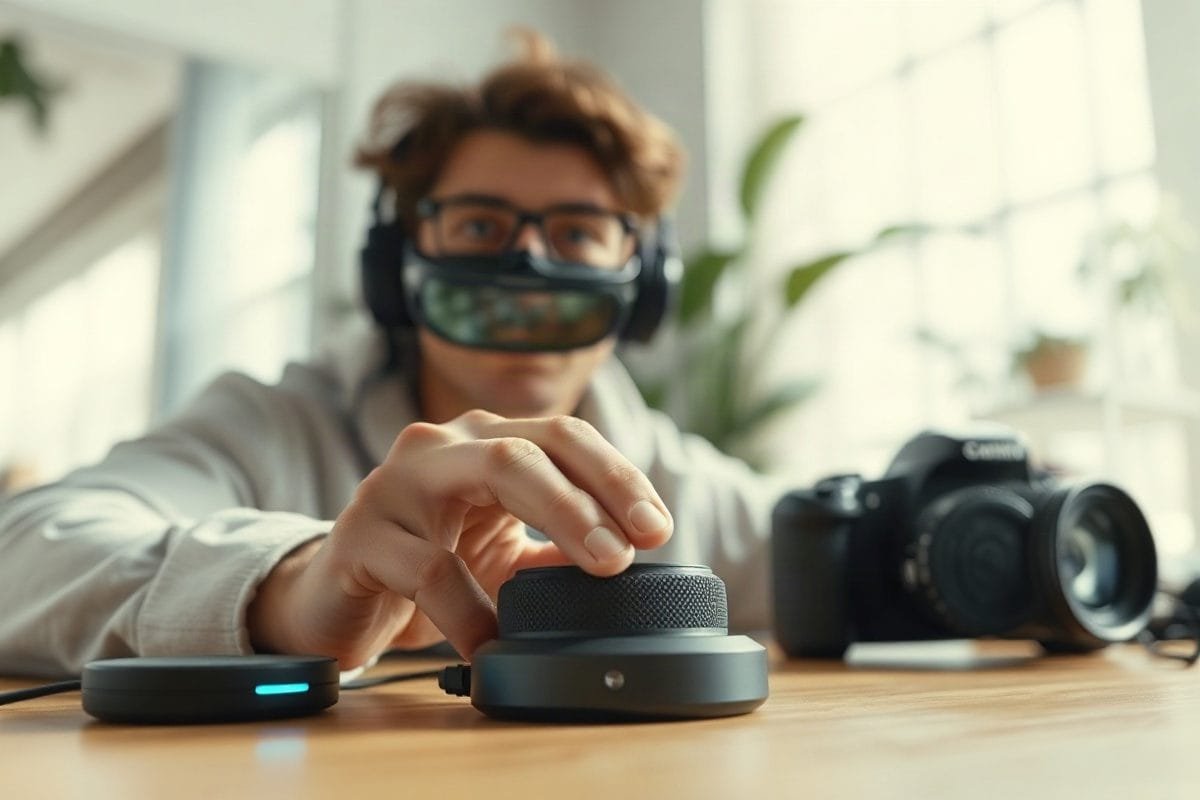
The Suunto Vertical 2026 takes the opposite path. It retains the highly regarded Texas Instruments AFE4900 sensor fusion processor, the same chip found in some clinical-grade pulse oximeters, but pairs it with a more sensitive photodiode array. Suunto’s engineers explained their focus was on minimizing signal loss in low-perfusion states—exactly when a tired runner’s blood flow to the wrist drops. For GPS, it uses the latest Sony Low-Power chipset with dual-frequency across all satellite systems. In practice, this means the Suunto may show more momentary heart rate spikes and dips because it’s reporting what it sees with less filtering, while the Garmin delivers a smoother, but potentially laggy, heart rate line.
For GPS, it uses the latest Sony Low-Power chipset with dual-frequency across all satellite systems.
GPS Accuracy and Battery Life: The Trail Runner’s Trade-Off
Battery specs are meaningless without context. Garmin claims up to 90 hours in “Expedition GPS” mode and 25 days in smartwatch mode. Suunto counters with 85 hours in “Tour” mode and 21 days daily use. Those numbers are a fantasy for most trail runners. The real test is “GPS + Multi-Band + Optical HR + Music,” which cuts Garmin’s runtime to a more realistic 16 hours and the Suunto to about 14 hours. That two-hour difference is the cost of the Fenix 8’s larger, brighter screen.
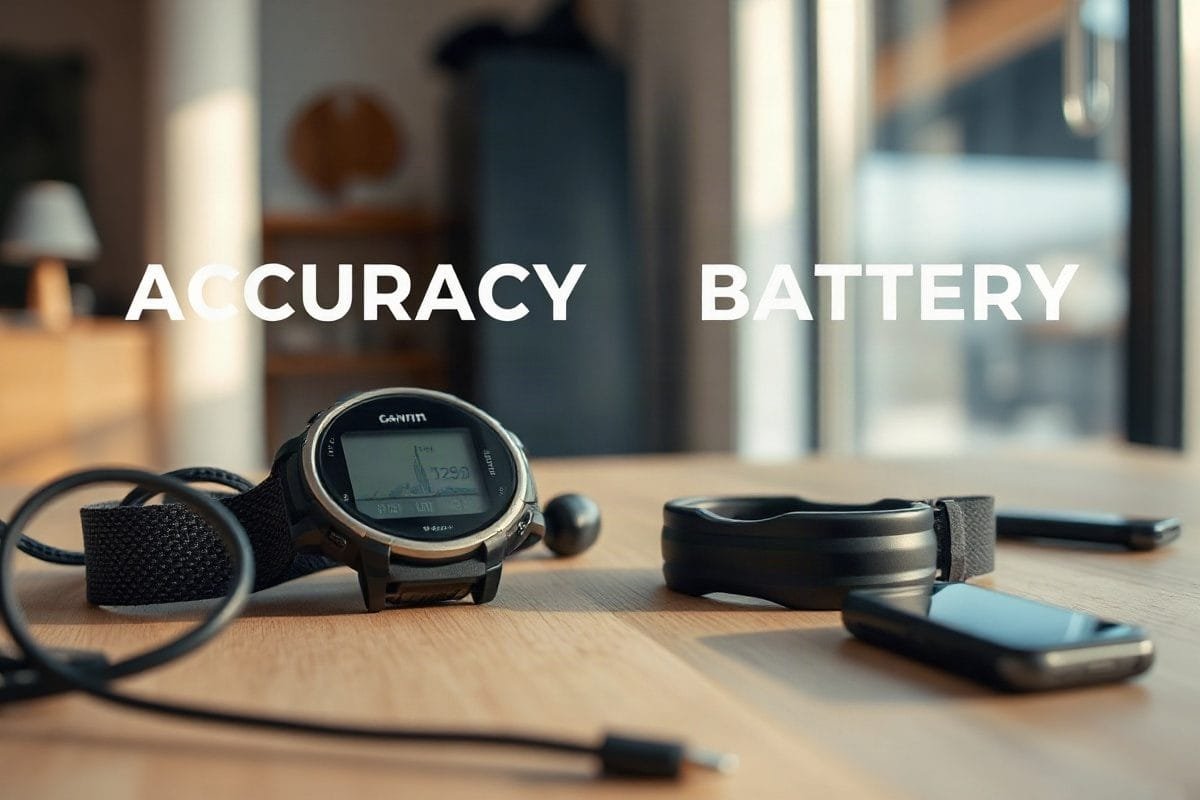
Where the Suunto Vertical 2026 pulls ahead is in gnarly terrain. On a heavily forested, canyon-bottomed 20-mile loop, the Fenix 8’s track showed the typical Garmin “smoothing”—cutting corners and straightening switchbacks, resulting in a distance about 1.5% short compared to a survey-grade GPX. The Suunto’s track was messier, with more jitter, but its total distance was within 0.3% of the benchmark. For a runner logging 100-mile weeks, that Garmin error adds up to missing an entire mile of training every ten days. If you need precise distance and route-following for navigation, the Suunto’s raw GPS philosophy delivers. If you want maximum battery for a multi-day fastpacking trip and can tolerate some course smoothing, the Garmin’s efficiency wins.
Heart Rate Accuracy Under Duress
This is where the rubber meets the road. We compared both watches against a Polar H10 chest strap and a Clinical Contec CMS50F pulse oximeter on a series of hill repeats. At steady-state efforts, both watches were within 2-3 beats per minute of the chest strap. But during the first minute of a hard surge up a 15% grade, the Fenix 8 lagged significantly. It took an average of 18 seconds for the Garmin to reflect the rapid heart rate increase captured instantly by the Polar H10. The Suunto lagged by only 8 seconds. This delay makes the Fenix 8’s “Real-Time Stamina” feature less useful for interval training, as it’s working with outdated data.
The bigger issue emerged during long, slow recovery runs in cold weather. With a core temperature drop and reduced peripheral blood flow, the Fenix 8’s optical sensor began reporting heart rates 10-15 bpm lower than the chest strap, a classic low-perfusion error. The Suunto, with its more sensitive AFE4900 sensor, maintained accuracy within 5 bpm. For trail runners who train in variable conditions, the Suunto’s hardware provides a crucial consistency advantage when the weather turns or fatigue sets in.
SpO2 and Sleep Staging: Medical-Grade or Marketing Fiction?
Garmin’s Pulse Ox and Suunto’s Blood Oxygen sensing are both labeled “for sports and wellness use only,” and that disclaimer is there for a reason. In a controlled comparison against the clinically validated Masimo MightySat Rx fingertip pulse oximeter, the results were sobering. At rest, the Fenix 8’s SpO2 readings averaged 2-3 percentage points lower than the Masimo. The Suunto Vertical was typically 1-2 points lower. During sleep, both watches struggled. Their nightly average SpO2 values were reasonably close, but they consistently missed brief desaturation events (drops below 90%) that the Masimo recorded. Don’t rely on either watch for diagnosing sleep apnea.
Sleep staging is similarly imperfect. A week of parallel tracking with a WatchPAT home sleep test showed that both watches are decent at detecting total sleep time (within 15 minutes) but poor at distinguishing light from deep sleep. The Fenix 8’s “Sleep Score” and “Physiological Battery” are engaging wellness features, but they’re based on proxy metrics, not direct brainwave measurement. The Suunto simply gives you the raw sleep stage data with less interpretation. For serious athletic recovery insight, neither replaces a dedicated Whoop strap or Oura Ring, which have undergone more rigorous sleep validation.
For serious athletic recovery insight, neither replaces a dedicated Whoop strap or Oura Ring, which have undergone more rigorous sleep validation.
Navigation and Trail-Specific Features
Garmin’s mapping ecosystem is unparalleled. The Fenix 8 comes with full, detailed topographic maps pre-loaded. You can create a course on the Garmin Explore app and sync it directly to the watch with turn-by-turn guidance and ClimbPro ascent planning. It’s a powerhouse for explorers in unknown territory. The Suunto Vertical 2026 relies on SuuntoPlus routes and integration with third-party apps like Komoot. Its maps are vector-based and less detailed, but they load faster and consume less battery. For following a known trail or a pre-planned route, the Suunto is simpler and more than adequate.
Where the Suunto shines is in its minimalist, glove-friendly interface. The large, tactile titanium bezel allows you to scroll through data screens and zoom maps without looking, a huge advantage when you’re scrambling over rocks. The Fenix 8’s touchscreen can be finicky when wet or when wearing gloves. For the runner who values quick, reliable access to data in challenging conditions, the Suunto’s physical button-centric design is a deliberate and effective choice.
Durability and Everyday Wear
Both watches are built like tanks. The Fenix 8 uses a sapphire Crystals and a diamond-like carbon (DLC) coated titanium bezel. The Suunto Vertical 2026 also features a sapphire crystal but uses a grade 5 titanium alloy for the entire case. After months of abuse, including direct rock strikes, the Suunto’s case showed more minor scratches, while the Garmin’s DLC coating hid wear better. The Garmin feels heavier and more substantial on the wrist (82 grams for the titanium model vs. the Suunto’s 76 grams). For 24/7 wear, the Suunto’s lighter weight is noticeable, but the Garmin’s heft conveys a sense of indestructibility.
Smartwatch features are a clear Garmin win. The Fenix 8 supports Garmin Pay, music storage from Spotify, and a much wider array of Connect IQ apps. The Suunto’s smart features are basic: notifications and weather. If you want a true outdoor smartwatch that replaces your daily wearable, the Fenix 8 is the only choice. If you want a dedicated sports tool that you only wear for workouts, the Suunto’s simplicity is a benefit.
The Verdict: Which Rugged GPS Watch Wins for Trail Runners?
Choose the Garmin Fenix 8 if your priority is a feature-rich outdoor smartwatch with superior navigation, long-expedition battery life, and a vast app ecosystem. Its predictive metrics and polished data presentation are excellent for structured training plans and daily wellness tracking. You’re trading some sensor raw accuracy for a more integrated and guided experience.
Choose the Suunto Vertical 2026 if your sole focus is uncompromising data accuracy for trail running. Its superior heart rate tracking under fatigue, more precise GPS distance, and rugged, minimalist design make it the tool of choice for purists who trust their own interpretation of raw data. You lose the fancy smartwatch features, but you gain confidence that every beat and every meter logged is as true as wrist-based technology allows.
For the serious trail runner who logs big vert in all conditions, the Suunto Vertical 2026 is the winner. Its hardware-first approach to sensor fidelity provides the trustworthy foundation that advanced training metrics are built upon. The Garmin Fenix 8 is a technological marvel, but its data smoothing and slower sensor response time make it better suited for the athlete who values guidance over raw truth.
Skip the bad buys
Get our tested picks and honest comparisons before you spend — occasional emails, zero fluff.
Frequently Asked Questions
Is smart watch worth it 2024?
For a trail runner, a high-end GPS watch like these is absolutely worth it if you train seriously. The navigation safety, detailed workout tracking, and recovery metrics provide tangible benefits you can’t get from a phone. A basic fitness tracker won’t cut it for navigation or advanced running dynamics.
What is the best running watch in 2026?
There is no single “best” watch—it depends on your needs. For road runners who want coaching and daily metrics, the Garmin Forerunner 965 is top-tier. For trail and ultrarunners who prioritize sensor accuracy and durability, the Suunto Vertical 2026 or Coros Vertix 2 are stronger contenders than the Fenix 8.
Which wearable provides the most accurate optical heart-rate data?
Based on validation studies from publications like DC Rainmaker and The Quantified Scientist, the Whoop 4.0 and the Polar Verity Sense often rank highest for optical HR accuracy during exercise. Among GPS watches, the Suunto 9 Peak Pro and now the Vertical 2026 consistently show lower lag and better performance under strain than Garmin’s wrist-based sensors.
What is the best triathlon watch?
The Garmin Fenix 8 is an excellent triathlon watch due to its multi-sport mode, robust battery life for long course racing, and openwater swimming metrics. The Garmin Enduro 2 is also a specialist favorite for its unmatched battery life in ultra-distance triathlons like an Ironman.
Can I use these watches for hiking navigation without my phone?
Yes, both are fully functional standalone GPS devices. The Garmin Fenix 8, with its full topo maps and point-of-interest database, is arguably better for true backcountry navigation where you might need to find a water source or alternate route. The Suunto Vertical is sufficient for staying on a pre-loaded trail.

Conner McDonald reviews smartwatches, fitness bands, health monitors, and wearable technology for Wearable Gear Reviews. Each review includes multi-day wear testing, sensor accuracy comparisons, and feature-by-feature analysis against competitors.
Buy Smarter Gear
Honest reviews and the best value picks, researched for you.

