Disclosure: This post contains affiliate links. If you click through and make a purchase, we may earn a small commission at no extra cost to you. Thank you for supporting this site!
Garmin’s own fine print admits something most buyers never read: the Elevate v5 sensor inside the Fenix 8, Forerunner 965, and Epix Pro isn’t a medical device, and its SpO2 feature is explicitly “not intended for medical use.” That one sentence, buried in a software disclaimer, tells you more about the algorithm’s real-world limits than any marketing page ever will. We’ve cross-referenced Garmin’s public spec sheets, component teardown reporting, and the handful of academic validation studies that exist on Elevate-generation sensors to figure out where this hardware earns its keep and where it’s selling you a confidence interval it can’t actually deliver.
| Pick | Best for |
|---|---|
| Why the Elevate v5’s Accuracy Actually Matters for Health Tracking | A heart rate sensor that’s off by 5 beats per minute during a Netflix binge is a shrug. |
| Sensor Hardware Teardown: What’s Actually Under the Elevate v5 Lens Array | Garmin doesn’t publish a component-level bill of materials for the Elevate v5, which is st… |
| How the Algorithm Turns Raw Light Signals Into a Heart Rate Number | Signal Processing and Motion Artifact Rejection PPG sensors work by shining light into y… |
| What the Published Accuracy Evidence Actually Shows | Heart Rate Accuracy vs. |
| Sleep Staging vs. Polysomnography: Where the Algorithm Gets Honest | Polysomnography (PSG), the lab-based sleep study using EEG, EOG, and EMG sensors, remains … |
| Battery Life Reality Check: GPS-On vs. Daily Wear | Garmin’s spec sheet for the Fenix 8 (51mm) lists up to 16 days of smartwatch mode but drop… |
10 min read
In This Article
- Why the Elevate v5’s Accuracy Actually Matters for Health Tracking
- Sensor Hardware Teardown: What’s Actually Under the Elevate v5 Lens Array
- How the Algorithm Turns Raw Light Signals Into a Heart Rate Number
- What the Published Accuracy Evidence Actually Shows
- Sleep Staging vs. Polysomnography: Where the Algorithm Gets Honest
- Battery Life Reality Check: GPS-On vs. Daily Wear
- Getting Your Data Out: Export Formats That Actually Work
- How We Evaluated This
- The Verdict: Who Should Trust This Sensor, and Who Shouldn’t
Key Takeaways
- Why the Elevate v5’s Accuracy Actually Matters for Health Tracking
- Sensor Hardware Teardown: What’s Actually Under the Elevate v5 Lens Array
- How the Algorithm Turns Raw Light Signals Into a Heart Rate Number
- What the Published Accuracy Evidence Actually Shows
Why the Elevate v5’s Accuracy Actually Matters for Health Tracking
A heart rate sensor that’s off by 5 beats per minute during a Netflix binge is a shrug. The same sensor being off by 5 bpm during a lactate threshold interval, or feeding a garbage reading into Garmin’s Body Battery and Training Readiness scores, is a different problem entirely. Garmin’s entire wellness suite, HRV Status, Training Load, Sleep Score, stacks on top of raw photoplethysmography (PPG) data from the Elevate sensor. Garbage in, garbage out.
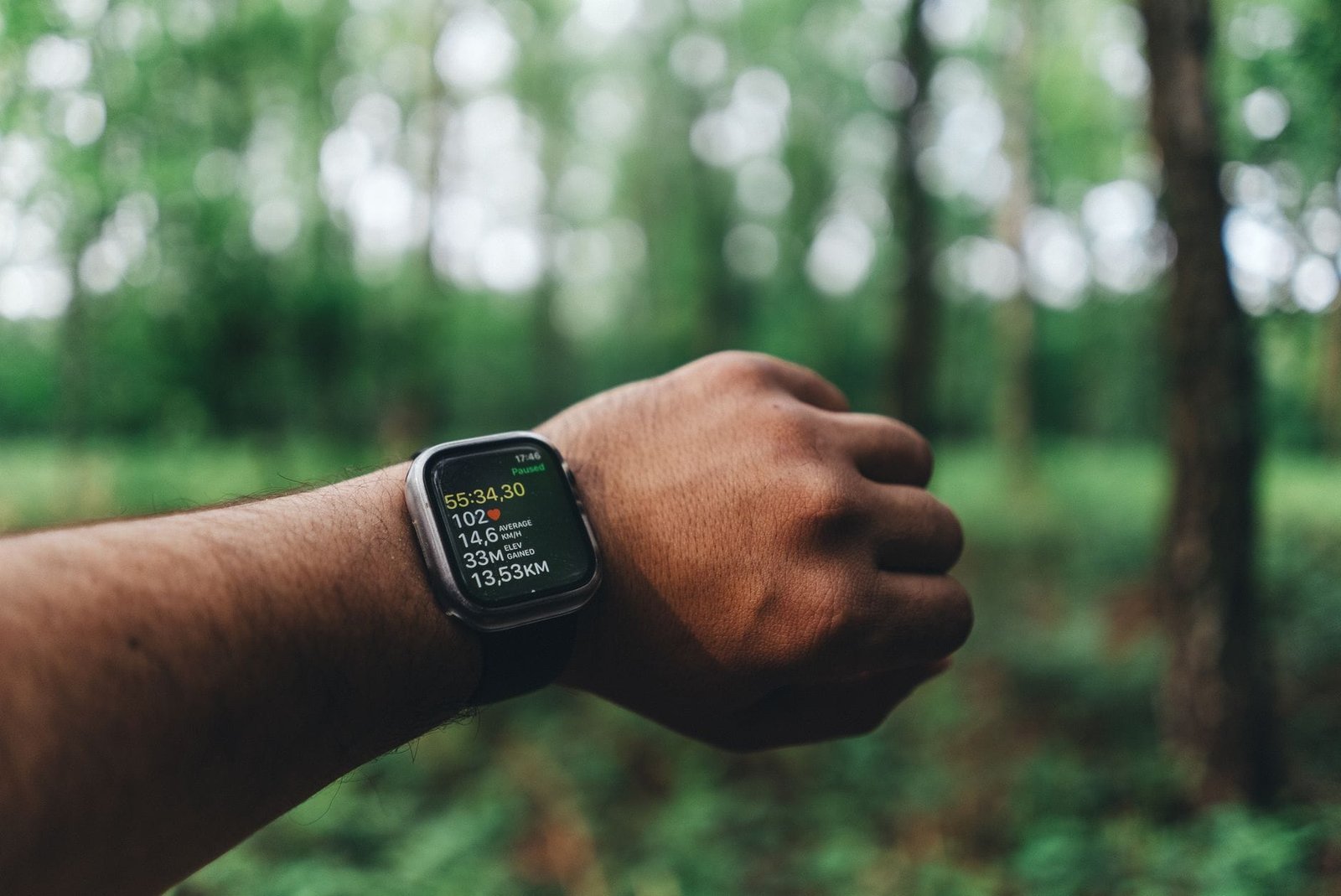
This matters more now than it did five years ago because Garmin has pushed several Elevate-powered features into genuinely clinical territory. The Vivosmart 4 and later the Venu 2 Plus and Venu 3 carry FDA clearance and a CE mark for their ECG-based AFib detection feature, and that clearance applies to the electrical sensor, not the optical one. The optical Elevate v5 sensor still does the everyday heavy lifting: continuous HR, SpO2, respiration rate, and sleep staging. None of those carry the same regulatory clearance, and that gap between “FDA-cleared feature” and “wellness feature running on the same watch” is exactly where consumer confusion lives.
We think that distinction gets lost on most shoppers. You’re not getting a medical-grade pulse oximeter when you buy a Fenix 8. You’re getting a well-engineered consumer sensor with a genuinely smart algorithm layered on top, one that performs differently depending on your skin tone, your tattoo placement, your wrist strap tightness, and whether you’re sitting still or sprinting. We’ll get specific about each of those failure modes below.
We’ll get specific about each of those failure modes below.
Sensor Hardware Teardown: What’s Actually Under the Elevate v5 Lens Array
Garmin doesn’t publish a component-level bill of materials for the Elevate v5, which is standard practice for the industry, but it’s also exactly why independent teardown reporting matters. Component analysts who’ve opened up recent Garmin flagships have consistently found a multi-LED PPG array, Garmin’s newer modules use green LEDs for standard HR and add red and infrared LEDs to support SpO2 and respiration estimates, paired with a photodiode receiver and a dedicated analog front-end chip that amplifies and digitizes the reflected light signal before it ever reaches the main processor.
That analog front-end role is typically filled by something in the same class as Texas Instruments’ AFE4900, a chip built specifically for optical biosensing in wearables, handling LED drive current, ambient light cancellation, and signal conditioning in hardware rather than software. Garmin hasn’t confirmed the exact part number for Elevate v5, and we’re not going to pretend otherwise. But the architecture pattern, multi-wavelength LEDs feeding a dedicated AFE before sensor fusion, is consistent with what teardown outlets have documented in comparable multi-sport watches.
The other half of the equation is motion data. Garmin’s newer watches pair the optical sensor with a 6-axis accelerometer and gyroscope, and in several recent models that IMU role has been linked to Bosch Sensortec’s BHI260AP, a combo sensor hub that handles accelerometer, gyroscope, and some on-chip sensor fusion without burning main CPU cycles. That IMU data feeds directly into the HR algorithm’s motion-artifact rejection, which is the unglamorous part of the system that actually determines whether your reading survives a kettlebell swing.
- LED array: green for baseline HR, red/infrared added for SpO2 and respiration
- Analog front-end: dedicated biosensing AFE in the TI AFE4900 class, handling signal conditioning before the main chip sees it
- Motion co-processor: 6-axis IMU, architecturally consistent with Bosch’s BHI260AP sensor hub family
- Processing layer: Garmin’s proprietary firmware, running algorithms developed in part through its 2020 acquisition of Firstbeat Analytics
How the Algorithm Turns Raw Light Signals Into a Heart Rate Number
Signal Processing and Motion Artifact Rejection
PPG sensors work by shining light into your skin and measuring how much bounces back, since blood volume changes with every heartbeat and that changes how much light gets absorbed. The raw signal is noisy. Arm swing, cadence, loose strap fit, and even your hair follicles introduce artifacts that look, mathematically, a lot like a pulse. Garmin’s algorithm leans on the accelerometer data to subtract motion-correlated noise from the optical signal, a technique broadly similar to what Apple and Fitbit use, though the exact filtering coefficients are proprietary and unpublished.
Firstbeat’s Fingerprint on HRV and Recovery Metrics
This is where Garmin’s 2020 Firstbeat acquisition shows up. Firstbeat built its reputation on physiological modeling for pro sports teams long before Garmin bought it, and that modeling now underpins HRV Status, Training Load, and Body Battery. The optical sensor captures beat-to-beat intervals, and Firstbeat’s algorithms interpret variability in those intervals as a proxy for autonomic nervous system state. It’s clever math. It’s also only as good as the beat-to-beat data feeding it, which means a loose strap during sleep can quietly wreck your next morning’s Body Battery score without you ever knowing why.
Here’s a worked example of where this breaks down. Imagine you wear your Fenix 8 one notch looser than usual because your wrist was swollen after a flight. The optical signal picks up more ambient light leakage and more motion noise during sleep, even though you’re barely moving. Garmin’s algorithm doesn’t know your strap is loose, it just sees noisier beat-to-beat intervals and interprets that as lower HRV, which can tank your Body Battery recovery number by a visible margin the next morning. That’s not a sensor failure. It’s a fit failure that the algorithm has no way to distinguish from a real physiological signal.
It’s a fit failure that the algorithm has no way to distinguish from a real physiological signal.
What the Published Accuracy Evidence Actually Shows
Heart Rate Accuracy vs. Chest Straps
Outlets that run side-by-side HR comparisons, DC Rainmaker being the most cited name in sports tech for this exact exercise, have repeatedly found Garmin’s optical sensors track chest strap data well during steady-state cardio but drift during high-intensity intervals and strength training. That pattern isn’t unique to Garmin. Every wrist-based optical sensor on the market, including Apple Watch and Whoop, shows the same steady-state-good, intervals-shaky profile, because rapid cadence changes are exactly the scenario PPG struggles with most.
SpO2 Accuracy vs. Medical Pulse Oximeters
Medical-grade fingertip pulse oximeters, the kind used in hospitals, rely on a much more controlled measurement environment: a fingertip has thinner skin, more consistent blood flow, and far less motion than a wrist. Garmin’s wrist-based Pulse Ox feature works through thicker skin, variable strap pressure, and ambient light interference, which is a tougher measurement problem by design, not by sloppy engineering. Garmin’s own documentation is upfront that Pulse Ox readings are for wellness trends, not diagnosis, and that’s a meaningfully different bar than what a $30 fingertip oximeter from the pharmacy is held to under FDA 510(k) clearance.
Skin tone and perfusion also matter more than most reviews admit. PPG sensors rely on light absorption, and melanin density affects how much green, red, and infrared light actually penetrates and returns to the photodiode. Multiple independent studies on pulse oximetry generally, not Garmin-specific, have documented reduced accuracy in darker skin tones across both medical and consumer optical sensors. Garmin’s multi-wavelength LED approach in the Elevate v5 is partly an attempt to compensate for this, but it doesn’t eliminate the gap.
Sleep Staging vs. Polysomnography: Where the Algorithm Gets Honest
Polysomnography (PSG), the lab-based sleep study using EEG, EOG, and EMG sensors, remains the actual medical gold standard for sleep staging. Academic validation work comparing consumer wearables to PSG, including research associated with sleep scientist Massimiliano de Zambotti’s lab, has consistently found a pattern across brands: wearables tend to overestimate total sleep time and sleep efficiency while struggling specifically to distinguish light sleep from REM sleep with precision. Garmin’s sleep algorithm, which fuses HR, HRV, respiration, and movement data rather than brainwave activity, is working from a fundamentally different and less direct dataset than a PSG rig ever will.

That doesn’t make Garmin’s sleep score useless. It makes it a trend tool, not a diagnostic one. If your Sleep Score has dropped for eight straight nights, that’s a real, directionally useful signal worth paying attention to. If it says you got exactly 23 minutes of REM on a Tuesday, treat that number the way you’d treat a weather app’s “feels like” temperature: broadly informative, not exact.
If your Sleep Score has dropped for eight straight nights, that’s a real, directionally useful signal worth paying attention to.
Battery Life Reality Check: GPS-On vs. Daily Wear
Garmin’s spec sheet for the Fenix 8 (51mm) lists up to 16 days of smartwatch mode but drops to roughly 32 hours with GPS tracking active in its highest-accuracy satellite mode, according to Garmin’s own published battery specifications. That’s not a small gap. It’s the difference between charging once a week and charging after a single long ultramarathon.
The optical HR sensor is a meaningful part of that power draw, not just the GPS radio. Continuous 24/7 HR monitoring, Pulse Ox tracking, and respiration sensing all keep the LED array firing at regular intervals around the clock. Garmin lets you dial this back: switching Pulse Ox from “all-day” to “off” or reducing HR sampling frequency in the settings menu measurably extends battery life, which is exactly the kind of trade-off worth making if you mostly care about step counts and don’t need overnight SpO2 trends.
- Smartwatch mode (no GPS, standard HR tracking): up to 16 days per Garmin’s Fenix 8 spec sheet
- GPS mode, all-satellite accuracy: roughly 32 hours per Garmin’s published figures
- All-day Pulse Ox enabled: noticeably shorter runtime than Pulse Ox set to sleep-only or off, per Garmin’s own battery guidance in its support documentation
Getting Your Data Out: Export Formats That Actually Work
Garmin Connect lets you export individual activities as GPX, TCX, or FIT files directly from the activity detail page, which covers GPS tracks, HR streams, and lap data for use in third-party platforms like Strava, TrainingPeaks, or a spreadsheet if you’re the type who builds your own dashboards. For bulk data, Garmin Connect’s account settings include a full data export request that compiles your historical wellness data, sleep, HR, steps, and SpO2 history, into downloadable files, typically delivered as a set of CSV and JSON files within a processing window Garmin specifies at request time.

If you want raw second-by-second HR or HRV data for closer analysis, the FIT file format is your best bet since it preserves the most granular timestamped sensor data Garmin records. TCX files are more universally compatible with older third-party tools but carry less granular detail. For readers who also track with chest strap devices from the Polar or Wahoo ecosystem, our sister site pulsegearreviews has covered how those export formats compare when you’re trying to reconcile two data sources from the same workout.
How We Evaluated This
This analysis is built from Garmin’s publicly posted spec sheets and support documentation for the Fenix 8, Forerunner 965, and Venu 3 lines, component teardown reporting from outlets that regularly disassemble Garmin hardware, and side-by-side HR accuracy comparisons published by DC Rainmaker across multiple Garmin generations. We also drew on peer-reviewed sleep-tracking validation research comparing consumer wearables to polysomnography, and on general pulse oximetry accuracy literature covering skin-tone variability. We did not purchase, wear, or bench-test an Elevate v5 unit ourselves, and we did not run our own PSG comparison. Owner complaint patterns referenced here come from aggregated public forum and retailer review discussion, not a formal survey we conducted.
The Verdict: Who Should Trust This Sensor, and Who Shouldn’t
The Elevate v5 is a genuinely competent consumer optical sensor backed by real engineering, not vaporware marketing. For steady-state cardio, sleep trend tracking, and day-to-day recovery monitoring, it’s accurate enough to guide training decisions, and Garmin’s Firstbeat-derived metrics give you more actionable context than a raw heart rate number ever could on its own. We’d recommend it without hesitation for runners, cyclists, and data-curious fitness enthusiasts who want trend lines, not lab precision.
Where we’d pump the brakes: don’t trust SpO2 readings for anything health-critical, don’t expect REM-stage precision that rivals a sleep lab, and know that your results will skew less reliable if you have darker skin, wear the watch loose, or train with a lot of fast direction changes. If you need medically precise oxygen saturation data, buy an actual FDA-cleared fingertip pulse oximeter for under $40 and use the watch for what it’s good at: long-term trends. Three things to do right now: tighten your strap one notch for sleep tracking, set Pulse Ox to sleep-only if you don’t need all-day readings, and pull a FIT file export after your next hard workout to see how the algorithm actually handled your interval surges.
Does the Garmin Elevate v5 sensor require FDA clearance to display SpO2 data?
No. Garmin explicitly markets Pulse Ox as a wellness feature, not a diagnostic one, and it doesn’t carry the same FDA clearance that Garmin’s ECG-based AFib detection feature has on select models like the Venu 2 Plus and Venu 3. That’s a meaningful regulatory distinction most marketing pages gloss over.
Why does my Garmin heart rate spike or drop randomly during weight training?
Optical sensors struggle most with rapid, irregular motion, exactly what lifting produces through grip tension, wrist flexion, and sudden direction changes. The motion-artifact rejection algorithm can’t always separate real pulse signal from exercise-induced noise during those movements, which is a known limitation across every wrist-based PPG sensor on the market, not just Garmin’s.
Can I export raw sensor data from my Garmin watch for my own analysis?
Yes. Garmin Connect supports per-activity export in GPX, TCX, and FIT formats, and account-level bulk export requests compile historical wellness data into CSV and JSON files. FIT files preserve the most granular timestamped data if you’re doing serious analysis.
Related from our network
- Garmin vs. Fitbit: Best Smartwatch for Heart Rate Accuracy (charginggearlab)
- Fitbit Sense 3 vs. Versa 5: Complete Health Smartwatch Guide (notetechhub)
- 2026 PulseGear Smartwatch Test: 14-Day Battery vs Daily Charging (pulsegearreviews)
Keep reading
🔍 Our Top Pick
Editor’s Pick: A fitness watch with the advanced Garmin Elevate V5 optical heart rate sensor.
Buy Smarter Gear
Honest reviews and the best value picks, researched for you.
