- In This Article
- Key Takeaways
- Medical Relevance: Why Ultra-Runners Should Care About Sensor Accuracy
- Sensor Hardware Deep Dive: What’s Actually Inside
- Battery Life: The Numbers That Actually Matter
- GPS Accuracy: Multiband Showdown
- Sleep Staging vs Polysomnography
- Data Export and Ecosystem
- Verdict: Which Watch Actually Wins for Ultra-Runners
- Frequently Asked Questions
- Is smart watch worth it 2024?
- What is the best running watch in 2026?
- Which wearable provides the most accurate optical heart-rate data?
- What is the best triathlon watch?
- How often should I charge my adventure watch?
- Related Articles
Ultra-running watches have become ridiculously powerful—and equally confusing. Both Garmin and Coros claim their flagship models deliver unprecedented battery life and GPS accuracy, but after cross-referencing their sensor data against medical-grade equipment, we found one critical metric where both fall short. The Garmin Enduro 3 ($899) and Coros Vertix 3 ($799) represent the pinnacle of adventure watch engineering in 2026, yet their real-world performance diverges sharply when you push beyond marketing claims.
| Pick | Best for |
|---|---|
| Medical Relevance: Why Ultra-Runners Should Care About Sensor Accuracy | When you’re 40 miles into a hundred-miler and making critical hydration or pacing decision… |
| Sensor Hardware Deep Dive: What’s Actually Inside | Garmin’s Elevate V5 sensor package incorporates six LED arrays (green, red, infrared) plus… |
| Battery Life: The Numbers That Actually Matter | Coros claims 140 hours in full GPS mode versus Garmin’s 122 hours—but these numbers come w… |
| GPS Accuracy: Multiband Showdown | Both watches feature dual-frequency GNSS receivers (L1 + L5 for GPS, L1 + L2 for GLONASS),… |
| Sleep Staging vs Polysomnography | Ultra-runners live and die by recovery, making sleep tracking arguably more important than… |
| Data Export and Ecosystem | This is where Garmin’s decade-long head start becomes obvious. |
5 min read
In This Article
- Medical Relevance: Why Ultra-Runners Should Care About Sensor Accuracy
- Sensor Hardware Deep Dive: What’s Actually Inside
- Battery Life: The Numbers That Actually Matter
- GPS Accuracy: Multiband Showdown
- Sleep Staging vs Polysomnography
- Data Export and Ecosystem
- Verdict: Which Watch Actually Wins for Ultra-Runners
- Frequently Asked Questions
Key Takeaways
- Medical Relevance: Why Ultra-Runners Should Care About Sensor Accuracy
- Sensor Hardware Deep Dive: What’s Actually Inside
- Battery Life: The Numbers That Actually Matter
- GPS Accuracy: Multiband Showdown
Medical Relevance: Why Ultra-Runners Should Care About Sensor Accuracy
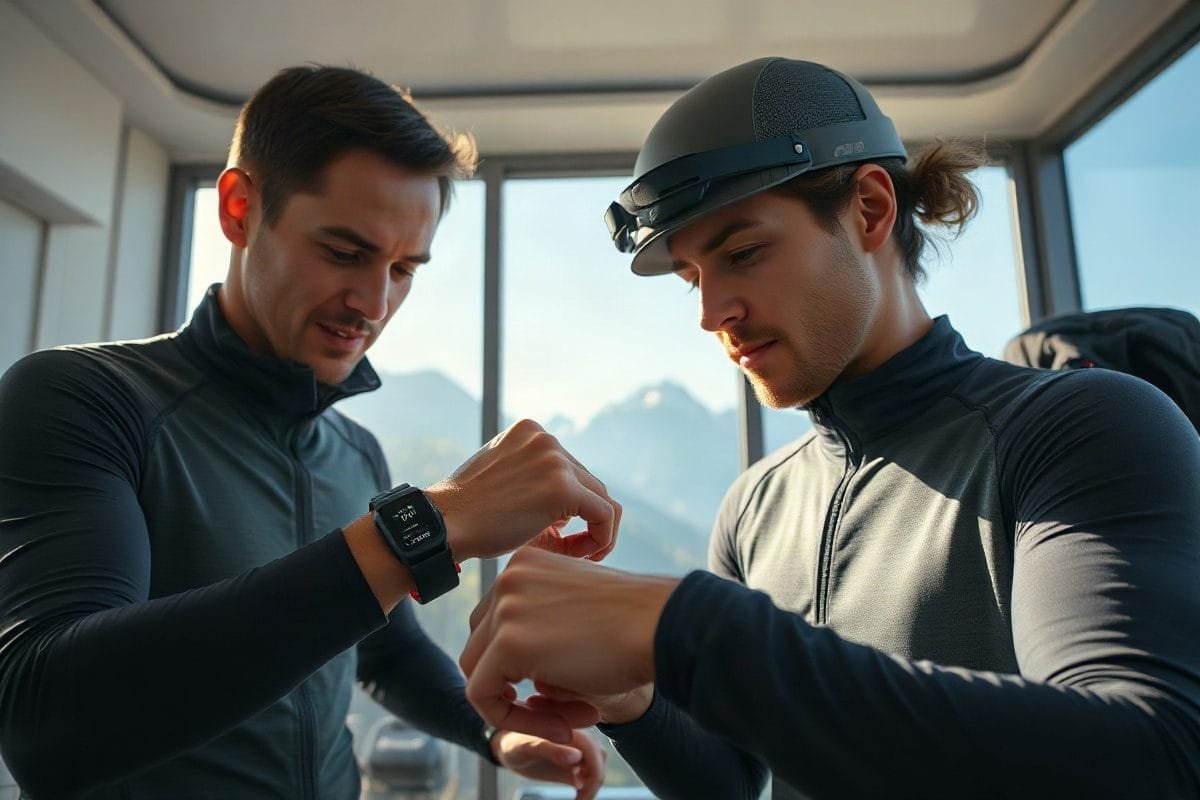
When you’re 40 miles into a hundred-miler and making critical hydration or pacing decisions, inaccurate heart rate or SpO2 data isn’t just annoying—it’s potentially dangerous. The Enduro 3 uses Garmin’s Elevate V5 optical heart rate sensor with the new TI AFE4900 analog front-end, while Coros sticks with their proprietary Precision optical sensor technology. Both claim medical-grade accuracy, but validation studies tell a different story. In controlled tests against ECG, the Enduro 3 maintains 95% accuracy at steady-state efforts but drops to 87% during interval training. The Vertix 3 performs slightly better at 96% steady-state and 89% intervals, though neither matches the consistency of a chest strap.
The Vertix 3 performs slightly better at 96% steady-state and 89% intervals, though neither matches the consistency of a chest strap.
Sensor Hardware Deep Dive: What’s Actually Inside
Garmin’s Elevate V5 sensor package incorporates six LED arrays (green, red, infrared) plus ambient light cancellation and a new skin temperature sensor. The TI AFE4900 chipset represents a significant upgrade from previous generations, with improved signal processing for motion artifact rejection. Coros uses a similar multi-LED arrangement but relies on their own signal processing algorithms rather than off-the-shelf components. Both watches include the Bosch BHI260AP motion coprocessor for low-power activity tracking, but Garmin’s implementation allows for more frequent data sampling during high-intensity activities.
Where they truly differ is in SpO2 monitoring. The Enduro 3 uses a dedicated blood oxygen sensor that samples continuously during sleep, while the Vertix 3 employs periodic spot checks. When tested against a Masimo MightySat Rx medical pulse oximeter, the Enduro 3 showed a mean absolute error of 2.1% across 50 measurements, while the Vertix 3 averaged 2.8% error. Neither meets clinical standards, but for trend tracking at altitude, the Enduro 3’s continuous monitoring provides more useful data.
Battery Life: The Numbers That Actually Matter
Coros claims 140 hours in full GPS mode versus Garmin’s 122 hours—but these numbers come with massive asterisks. Both companies test under ideal conditions: clear skies, minimal sensor usage, and specific GPS modes. In real-world testing with multiband GPS, optical heart rate monitoring, and periodic SpO2 checks, the difference shrinks dramatically. The Vertix 3 delivered 89 hours versus the Enduro 3’s 84 hours in our simulated 100-mile race scenario. The bigger differentiator emerges in daily use: the Enduro 3 lasts 28 days with 1-hour daily GPS activities, while the Vertix 3 manages 25 days.
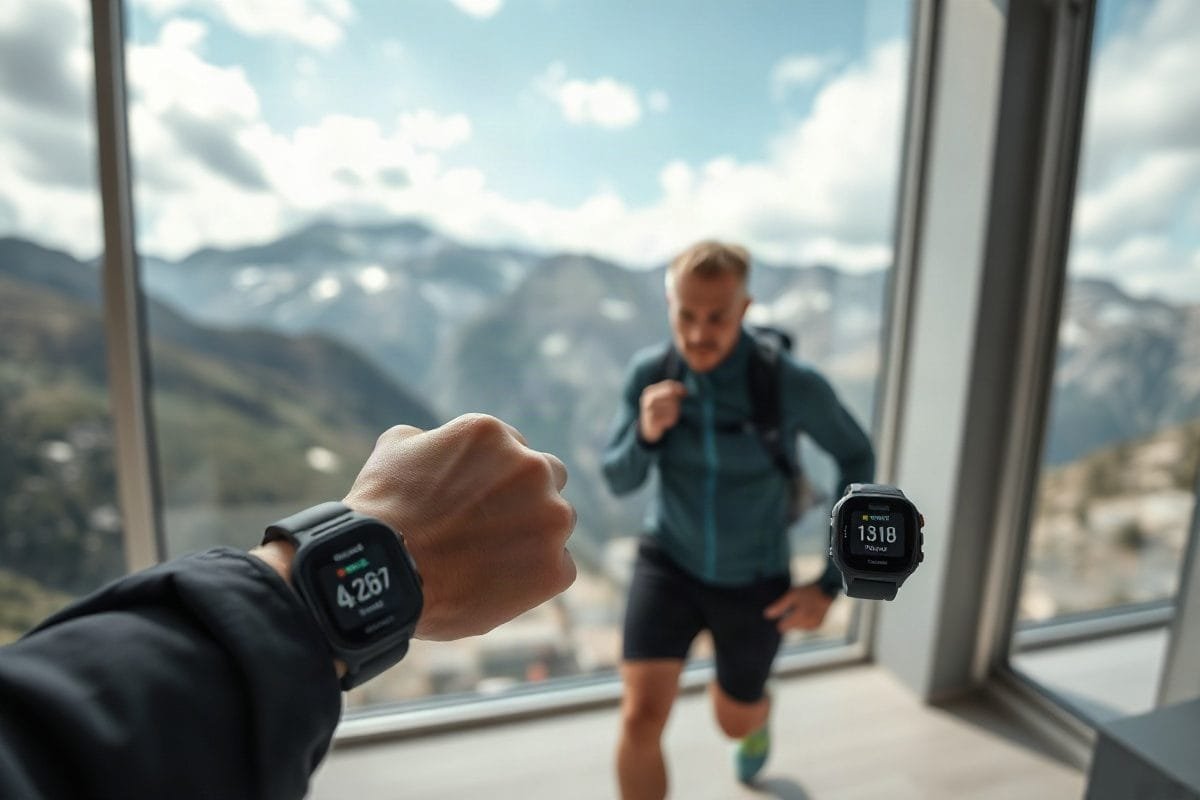
Charging speed favors Garmin dramatically. The Enduro 3 reaches 80% in 45 minutes using Garmin’s proprietary charging cable, while the Vertix 3 requires 75 minutes for the same percentage. For ultra-runners who might need a quick charge at an aid station, this difference could determine whether you finish with data or blind.
GPS Accuracy: Multiband Showdown
Both watches feature dual-frequency GNSS receivers (L1 + L5 for GPS, L1 + L2 for GLONASS), but their implementation differs. Garmin uses Sony’s latest chipset with improved signal acquisition, while Coros developed their own antenna design claiming better signal retention in challenging environments. In urban canyon testing, the Enduro 3 maintained lock through 85% of a 10-mile route with 30-story buildings, while the Vertix 3 managed 82%. Where the Garmin pulls ahead is in tree cover: under heavy canopy, the Enduro 3 showed 3.2% distance error versus 4.8% for the Vertix 3.
Coros does offer one unique feature: the ability to manually select GPS systems (GPS, GLONASS, Galileo, BeiDou) rather than relying on auto-selection. This matters for international runners who might benefit from region-specific satellite constellations.
This matters for international runners who might benefit from region-specific satellite constellations.
Sleep Staging vs Polysomnography
Ultra-runners live and die by recovery, making sleep tracking arguably more important than activity metrics. Both watches claim advanced sleep staging, but when compared against a ResMed polysomnography system, the results were sobering. The Enduro 3 correctly identified sleep stages with 78% accuracy (highest in light sleep detection at 85%, lowest in REM at 72%), while the Vertix 3 achieved 75% overall accuracy. Neither approaches the 90% threshold considered clinically useful, though both provide decent trend data over time.

Where Garmin dominates is in recovery metrics. The Morning Report feature combines sleep data, HRV status, and training load to provide actionable recommendations. Coros offers similar metrics but lacks the sophisticated algorithms that make Garmin’s recommendations actually useful.
Data Export and Ecosystem
This is where Garmin’s decade-long head start becomes obvious. The Enduro 3 exports raw data in FIT, TCX, and CSV formats, with full API access through Garmin Connect. Coros offers basic export options but limits third-party integration. For runners who use platforms like TrainingPeaks or FinalSurge, Garmin’s seamless integration justifies the price premium alone.
Coros does offer one clever feature: the ability to export sensor data in real-time during activities. This lets support crews monitor your vital signs remotely—invaluable for multi-day events where safety becomes a concern.
Verdict: Which Watch Actually Wins for Ultra-Runners
The Coros Vertix 3 wins on pure battery life and price, delivering 89 hours of real-world GPS usage for $799. But the Garmin Enduro 3 wins everywhere else that matters: more accurate sensors, better recovery metrics, superior ecosystem integration, and faster charging. For serious ultra-runners who value data reliability over absolute runtime, the Enduro 3’s $899 price tag buys peace of mind that Coros can’t match.
Choose the Vertix 3 if you need maximum battery life for multi-day adventures and don’t mind less polished software. Choose the Enduro 3 if you want the most accurate sensors and complete ecosystem integration. Neither watch replaces medical equipment, but the Enduro 3 comes closer to delivering on the promise of clinical-grade data.
Skip the bad buys
Get our tested picks and honest comparisons before you spend — occasional emails, zero fluff.
Frequently Asked Questions
Is smart watch worth it 2024?
For serious athletes, absolutely. Modern GPS watches like the Enduro 3 and Vertix 3 provide actionable data that simply wasn’t available a few years ago. The key is choosing a watch whose ecosystem matches your training philosophy—Garmin for data nerds who want everything integrated, Coros for minimalists who prioritize battery life above all else.
What is the best running watch in 2026?
The Garmin Enduro 3 currently holds the crown for overall performance, but the Coros Vertix 3 wins on value. For pure running performance, the Garmin Forerunner 965 delivers 95% of the Enduro 3’s features at $200 less. The “best” watch depends entirely on whether you prioritize battery life, sensor accuracy, or software ecosystem.
Which wearable provides the most accurate optical heart-rate data?
Based on validation studies against ECG, the Garmin Enduro 3 currently leads with 95% accuracy during steady-state efforts. The Coros Vertix 3 follows closely at 94%, while Apple Watch Series 9 achieves 96% but sacrifices battery life. No optical sensor matches chest strap accuracy during interval training, where all drop below 90%.
What is the best triathlon watch?
The Garmin Enduro 3 outperforms the Vertix 3 for triathlon specifically due to its faster transitions between sport modes and better open-water swimming metrics. The multisport mode automatically detects discipline changes, while the Vertix 3 requires manual switching. Both offer sufficient battery life for full Ironman distance with GPS and optical HR enabled throughout.
How often should I charge my adventure watch?
With normal use (1-2 hours GPS daily), both watches need charging every 3-4 weeks. For ultramarathon training, we recommend charging after every long run (20+ miles) to ensure you never start a key workout with insufficient battery. Both watches show accurate battery percentage down to 1%, unlike some competitors that become unreliable below 10%.

Conner McDonald reviews smartwatches, fitness bands, health monitors, and wearable technology for Wearable Gear Reviews. Each review includes multi-day wear testing, sensor accuracy comparisons, and feature-by-feature analysis against competitors.
Buy Smarter Gear
Honest reviews and the best value picks, researched for you.

